Event management platform – Gattinoni Travel
B2B SaaS for event operations
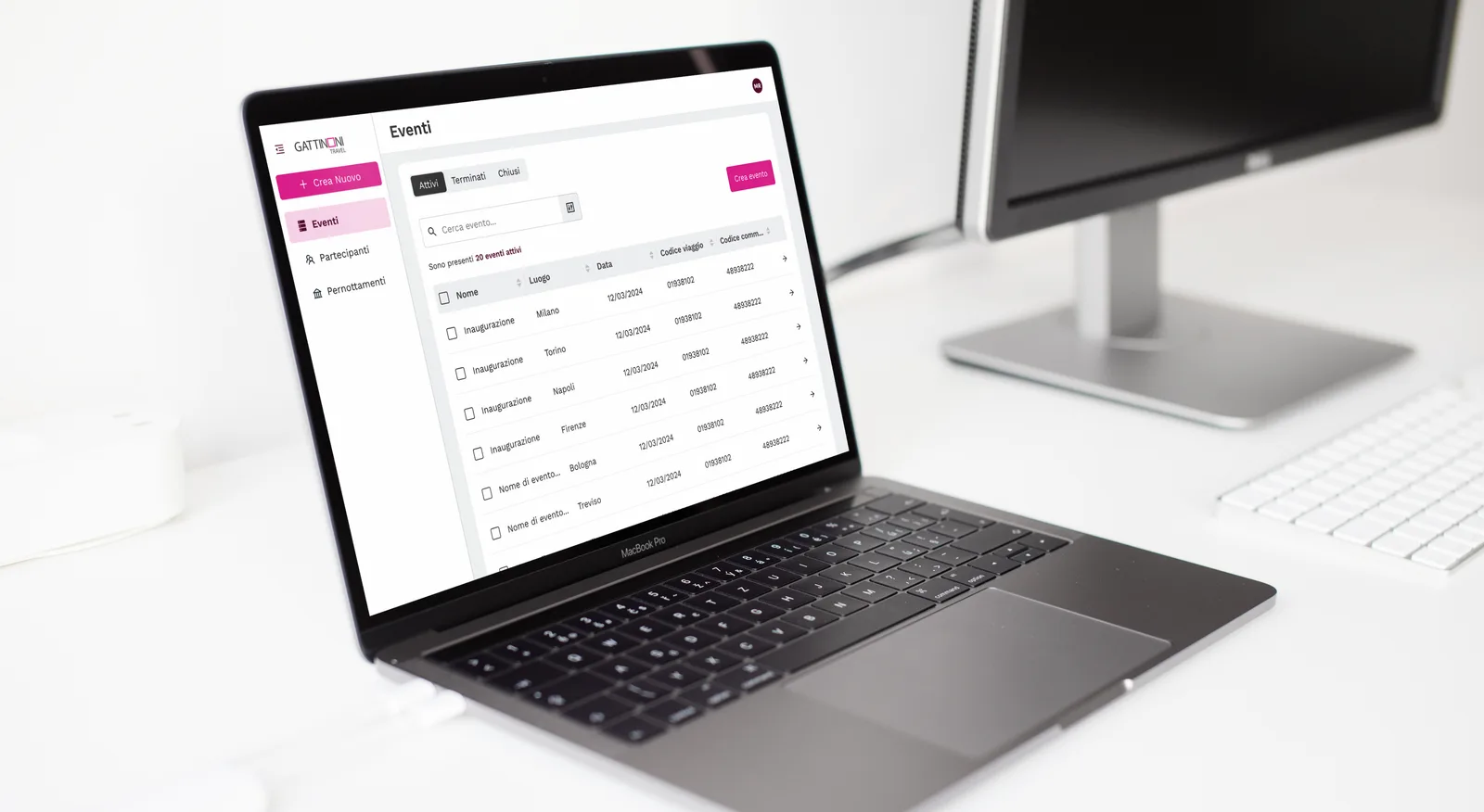
Managing every operational layer of a corporate event, from participants to travel, rooms and catering, in a single platform.
CORE PROBLEM
Event operations running on spreadsheets
All operational data lived in Excel files and email threads. No system held an event as a single object.
- One source of truth per event, and it was a spreadsheet.
- Too much manual data entry. Hundreds of participants per event, all typed in one by one.
- No way to book one thing for many people at once.
- Participant data was retyped from scratch for each new event.
DISCOVERY
I ran requirement sessions with the project managers, logistics and back-office staff, and walked through the Excel process they were using. Two things came out of it and shaped the whole product.
The first: they talk about events, but the data is really about people. The same participants come back year after year, and their passport, allergies and billing details should follow them instead of being retyped.
The second: things change constantly. Someone drops out two days before, a flight moves, a room gets reassigned. The product had to make changing something as fast as creating it.
From there, four rules: keep everything about an event in one place, enter data once and reuse it everywhere, act on many records at a time instead of one, and never lock an event before the team says it's over.
UX DECISIONS
Two navigation levels
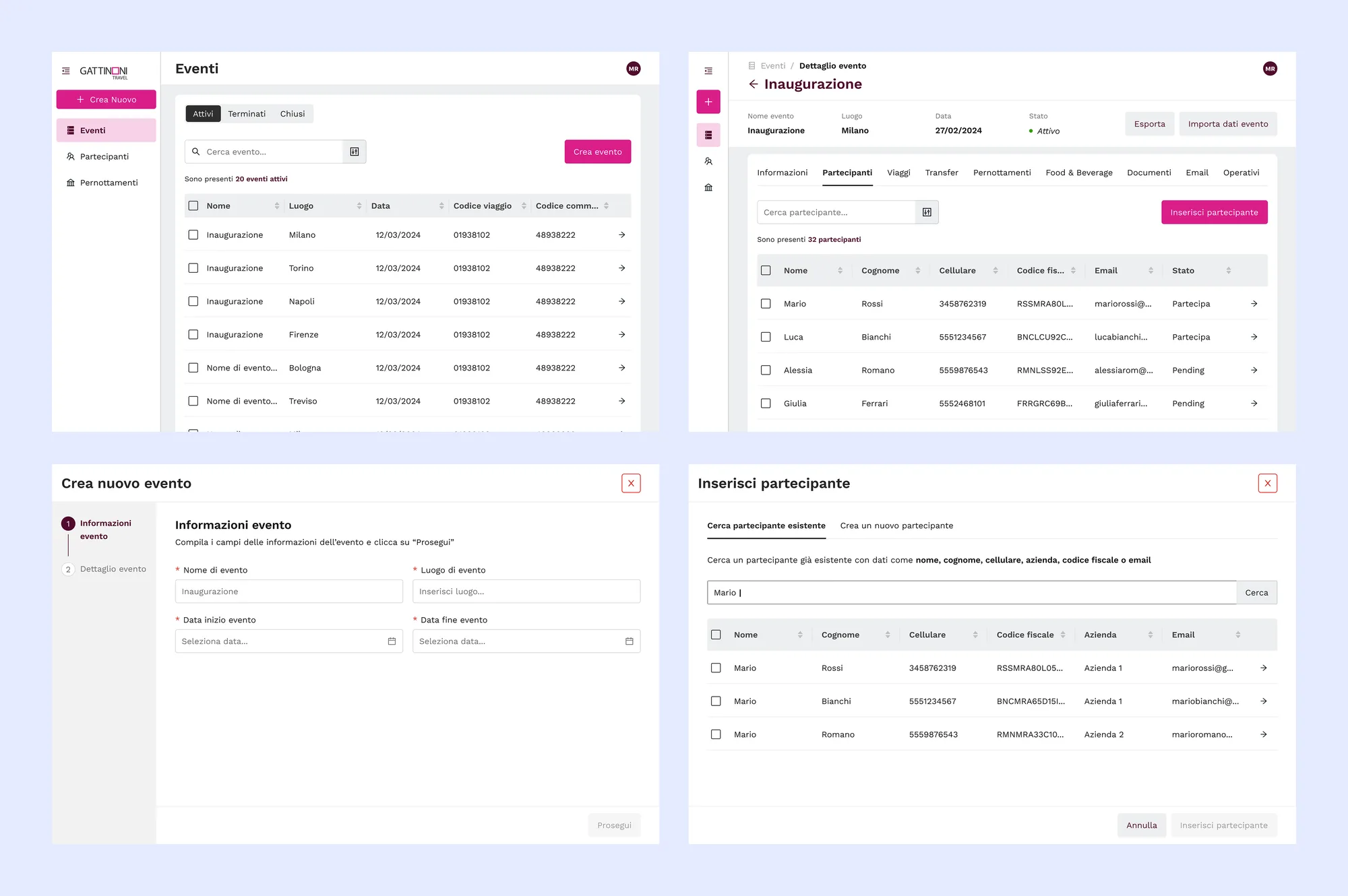
A global level (Events, Participants, Accommodation) holds the cross-event registries; the event level holds the work. This killed the most repetitive task in the old process and gave the business historical data it never had.
Nine domains, one object
The event page splits the operational scope into tabs. Tabs over nested pages because operators move laterally across domains constantly during delivery, flight, then room, then dietary requirement is one train of thought.
Resources shared, assignments individual
Flights, coaches, rooms and tables are created once at event level, then populated with participants. It works both ways: a flight created inside one participant's profile lands in the event's Travel section, ready for others.
The payoff shows up when someone drops out: swapping the person keeps the flight, the room and the table exactly where they were.

IMPLEMENTATION
Concept design
I mapped the whole structure from scratch: what lives at platform level, what lives inside an event, and how participants, flights, rooms and tables relate to each other. Then I designed every flow around the two things that actually eat the team's time, getting large amounts of data in and changing it later. So bulk import from Excel, drafts, filters, and multi-selection on every list.
Visual design and design system
I built the UI on Gattinoni's existing brand identity, using magenta as the only action colour on a neutral, high-contrast interface. Alongside the screens I built the design system that supports them, so that nine different operational areas could share the same components and behave the same way.
RETROSPECTIVE
- The edit flow matters more than the create flow. The real cost is changes made under pressure, not setup.
- A broad product needs a small vocabulary. Reusing a pattern always beat designing a bespoke one.